
The universe is about 13.8 billion years old and it is still expanding, faster and faster.
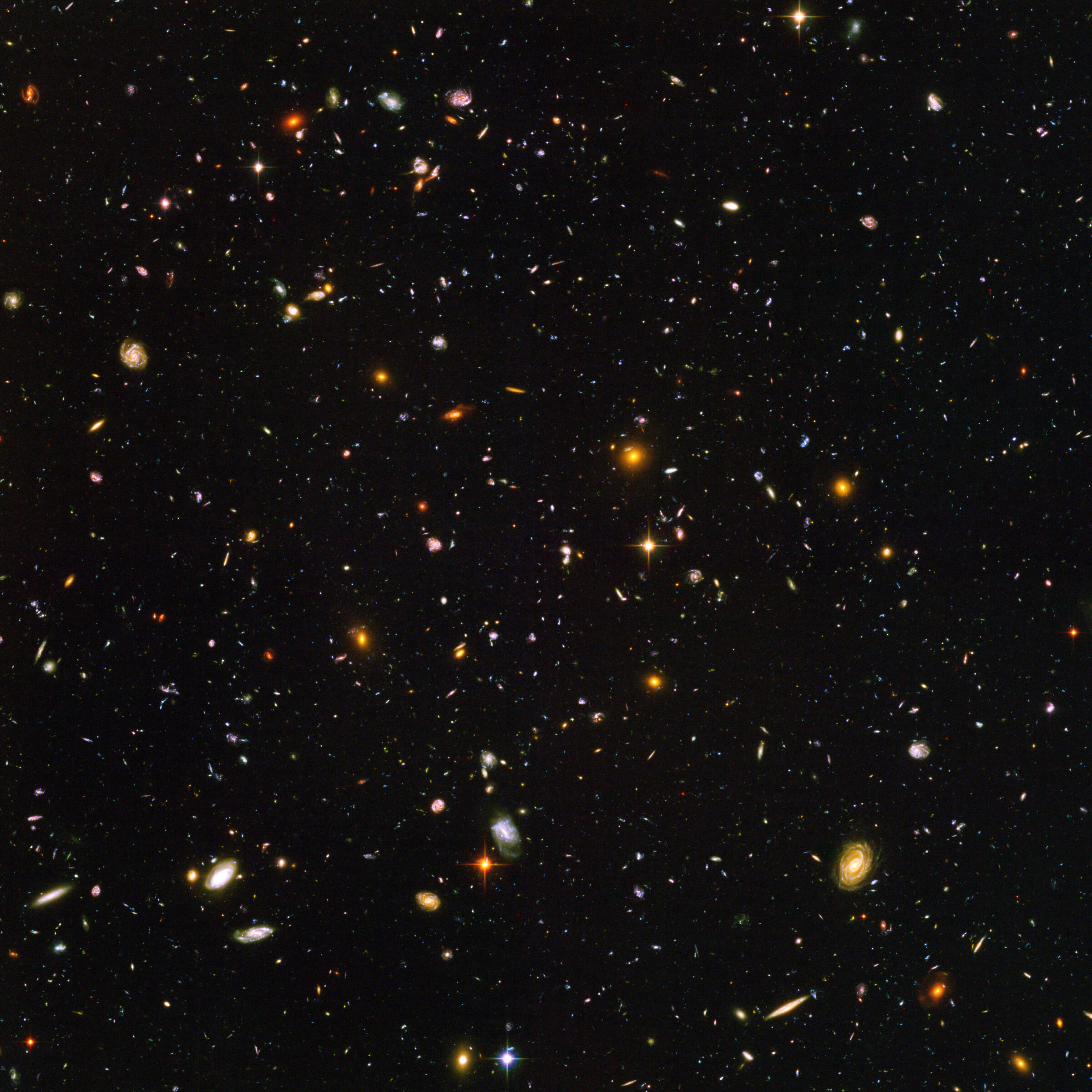
In 1929 the astronomer Edwin Hubble showed that distant galaxies are moving away from us, and that the more distant a galaxy is, the faster it recedes. The simplest explanation is that the universe as a whole is expanding.
How old is the universe?
If the universe is expanding, we can calculate backwards to the time when everything was packed together. Measurements of the cosmic microwave background and of the expansion rate give an age of about 13.8 billion years.
An accelerating universe
In 1998 two teams studying distant exploding stars, supernovae, found that the expansion is not slowing down, but speeding up. The discovery was awarded the Nobel Prize in Physics in 2011. The cause of the acceleration is called dark energy.
The universe is not only expanding, it is expanding faster today than it did billions of years ago.
An open question
Different methods give slightly different values for the current expansion rate, the Hubble constant. Measurements based on the early universe give about 67 km/s per megaparsec, while measurements of nearby galaxies give about 73. Astronomers call this disagreement the "Hubble tension", and it may point to new physics.