
Why we put telescopes into space, and what they have shown us.
Earth's atmosphere is good for life, but bad for astronomy. It blurs the images of stars, and it blocks most ultraviolet, X-ray and infrared light. Telescopes in space avoid both problems.
Famous space observatories
- Hubble Space Telescope: visible and ultraviolet light, launched in 1990.
- Chandra X-ray Observatory: X-rays from hot gas and black holes, launched in 1999.
- Spitzer Space Telescope: infrared light, operated from 2003 to 2020.
- James Webb Space Telescope: infrared light, launched in 2021.
- Gaia: a European mission that mapped the positions and motions of nearly two billion stars.
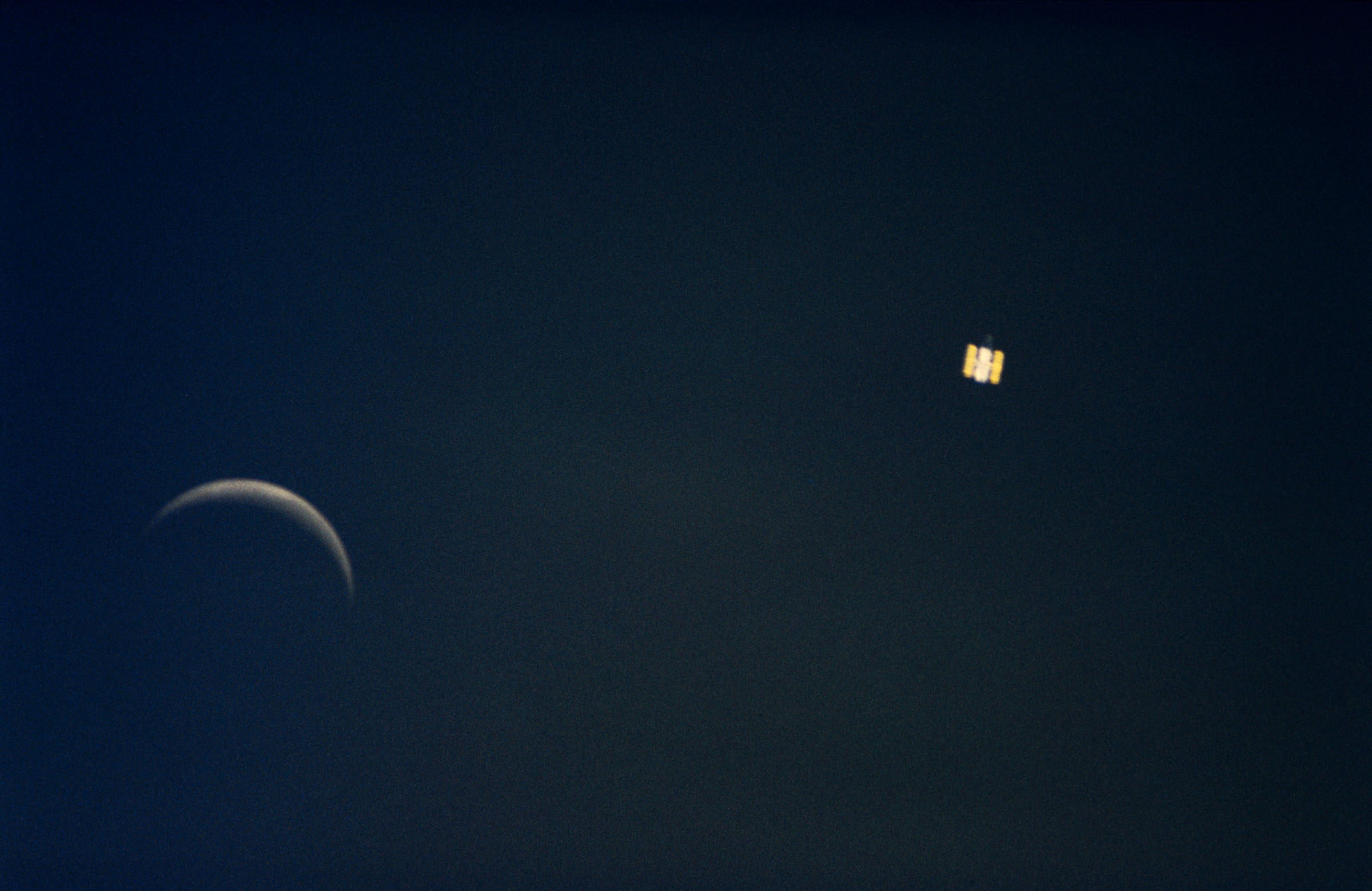
The photograph above was taken from the Space Shuttle Endeavour in December 1993, during the first mission to service Hubble. It shows the telescope with the Moon in the background.