
Earth's only natural satellite and the only other world humans have visited.
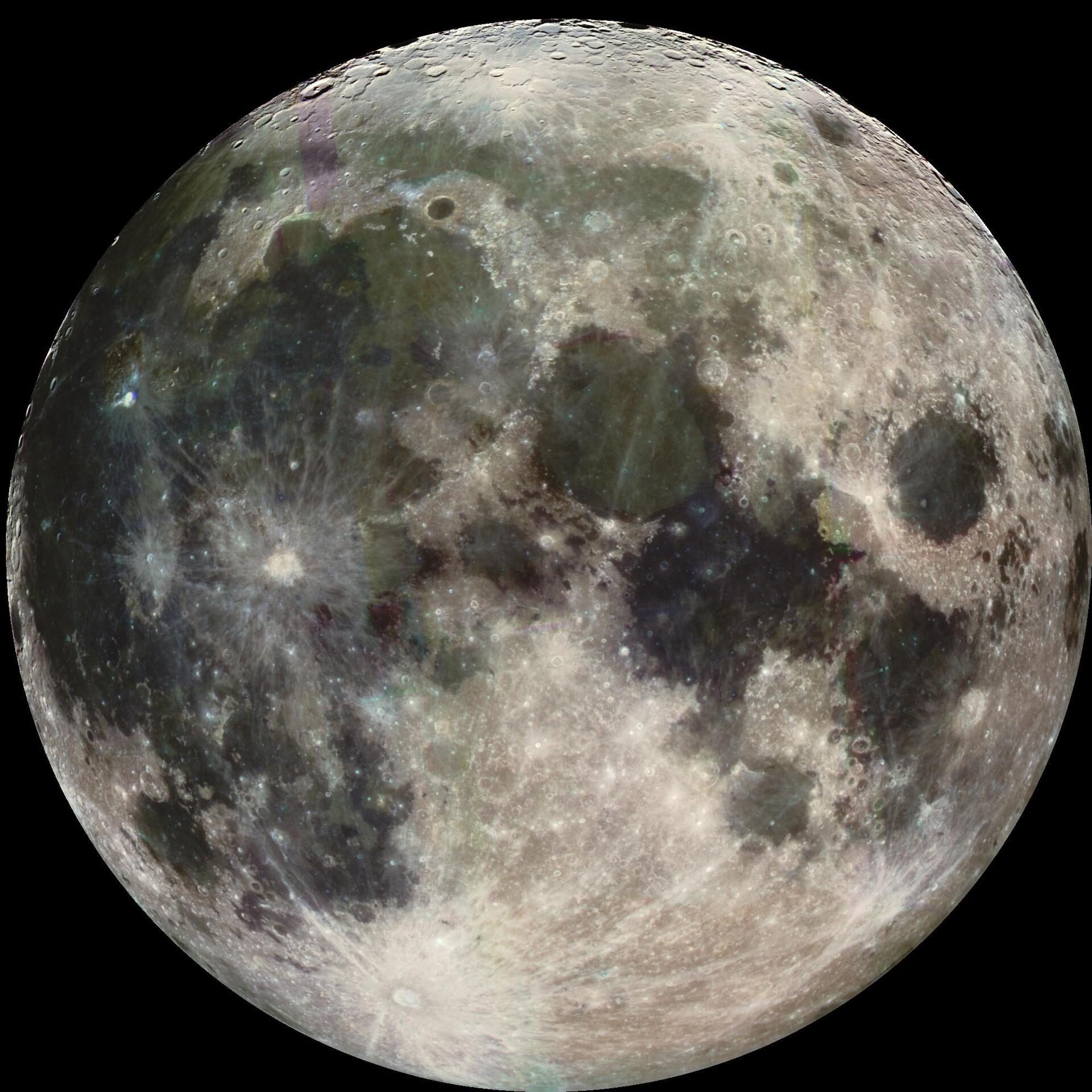
The Moon orbits Earth at an average distance of 384,400 km. It is about a quarter of Earth's diameter, which makes it unusually large compared with its planet.
Origin
The most widely accepted explanation is that the Moon formed about 4.5 billion years ago, when a Mars-sized body collided with the young Earth. The debris from the impact gathered in orbit and formed the Moon.
Always the same face
The Moon rotates once for each orbit around Earth, so we always see the same side. The dark areas are plains of solidified lava, the bright areas are older highlands. The bright crater with long rays near the bottom of the image above is Tycho.
Between 1969 and 1972, twelve astronauts walked on the Moon during six Apollo missions. Read more on the page Apollo Program.